Hail Damage Roof Inspection Indianapolis, IN | Insurance Experts
Forensic hail impact diagnostics, 100-sq-ft test square analysis, severe hail bruising verification, and emergency dispatch across Marion and Hamilton counties.
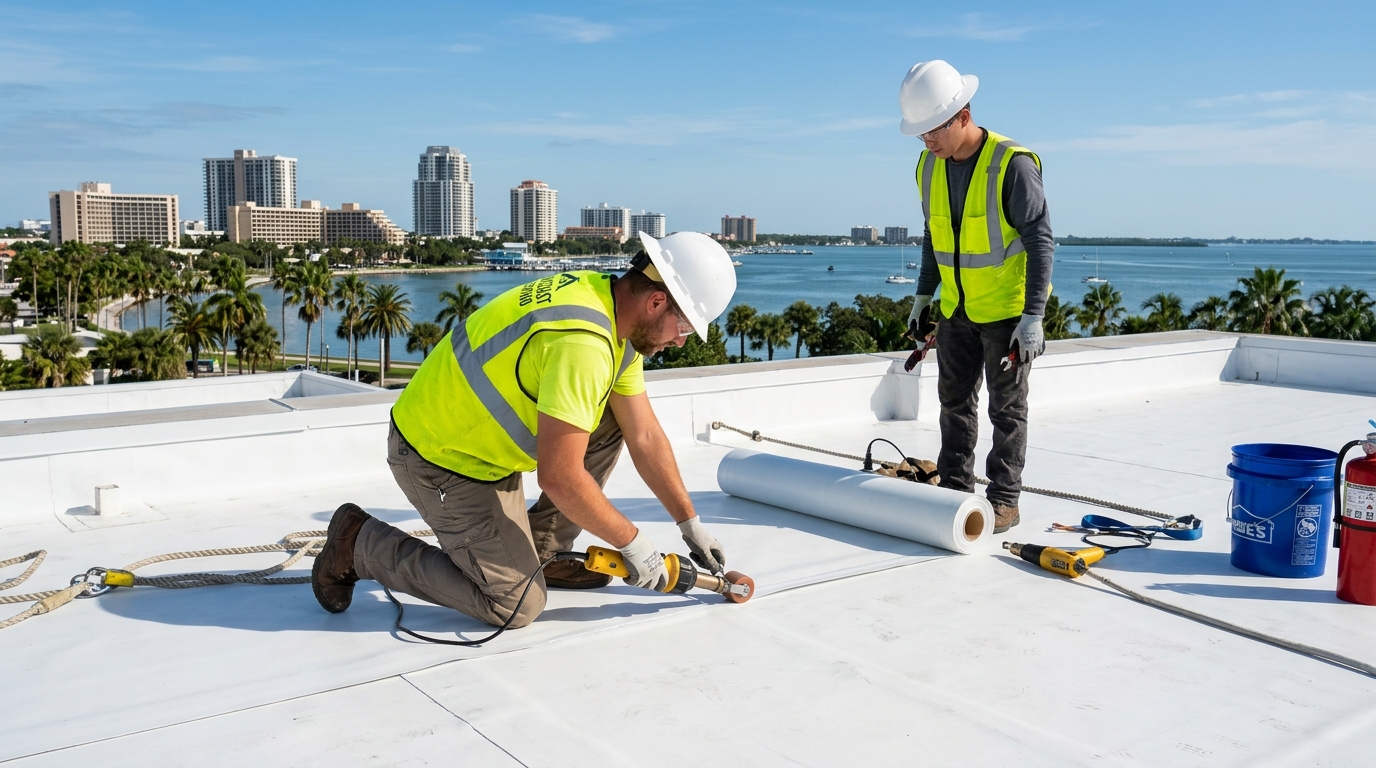
Severe convective storm complexes sweeping across the Central Indiana plains frequently unleash destructive hail across Greater Indianapolis, Marion County, and Hamilton County communities. Striking at terminal velocities exceeding 75 to 90 miles per hour, hail stones from quarter-sized to golf ball-sized fracture shingle matrices, crush protective mineral granules, and trigger catastrophic latent fiberglass mat bruising. Roof Expert USA operates a dedicated 24/7 hail dispatch network, connecting Indianapolis homeowners with independent, credentialed roofing specialists who perform standardized 10-foot by 10-foot test square forensic evaluations, collateral soft metal documentation, and non-destructive thermal leak detection.
Engineering Specialty: Midwest Hail Stone Impact Testing
While dislodged shingles or shattered skylight lenses are easily identified from ground level, the most pervasive threat to an Indianapolis roof is latent hail bruising. When an ice sphere strikes an asphalt shingle, its kinetic energy compresses the ceramic granule topcoat directly into the underlying asphalt-impregnated fiberglass substrate. Even if the top surface appears largely intact immediately following a storm, the internal glass-fiber reinforcing scrim suffers micro-fractures.
Over 6 to 18 months of Central Indiana's humid summer heat and winter freeze-thaw cycles, the crushed asphalt matrix dries, shrinks, and sheds its dislodged granules. Rain wash carries these granules into gutters, exposing unshielded bitumen to rapid ultraviolet oxidation. The micro-fractures gradually expand into through-tears, allowing moisture to seep into structural roof decking, rafters, and attic insulation long after the storm event has passed. Independent roofing contractors dispatched through our network perform tactile indentation tests, oblique angle lighting examinations, and microscopic core evaluations to verify latent bruising before moisture causes ceiling collapse.
Forensic Hail Damage Diagnostic Protocols
10x10 Test Square Forensic Mapping
Technicians chalk and evaluate 100-square-foot test squares across all directional exposures (north, south, east, and west) to enumerate qualifying impact strikes and prove storm-directional severity.
Collateral Soft Metal Indentation Analysis
Inspectors measure dent diameters on aluminum box vents, copper valley pans, gutter downspouts, AC condenser fins, and lead pipe flashings to verify hail stone size and impact density without dispute.
Sub-Surface Mat Integrity Verification
Contractors evaluate the underside of compromised shingle tabs for substrate star-burst cracks and fiber delamination where impact energy sheared through the internal fiberglass webbing.
Infrared Deck Moisture Tracing
Using FLIR high-resolution thermal imaging cameras, specialists scan attic decking to detect hidden moisture pockets where wind-driven storm squalls penetrated hail-compromised roof planes.
What Indianapolis Homeowners Should Do Following a Severe Hail Event
Protecting your property after a severe Central Indiana hail storm requires prompt, documented action to prevent compounding water damage and ensure insurance claim accuracy:
- Check Ground-Level Collateral Items: Examine your air conditioning unit fins, aluminum mailbox, patio furniture, siding, and window screens for denting. If soft metals are heavily dinged, your roof likely absorbed severe structural impacts.
- Inspect Attic Crawlspaces: Check your attic insulation and rafters with a bright flashlight for dampness, drip trails, or musty smells after the storm passes.
- Do Not Climb Steep Wet Slopes: Roof surfaces after a storm are littered with loose mineral granules and slick rainwater. Never risk personal injury—leave high-elevation inspections to harnessed emergency crews.
- Call Live Emergency Dispatch: Call (888) 208-4155 to schedule an emergency forensic evaluation with an independent Indianapolis contractor.
Frequently Asked Questions
Why is latent hail bruising so dangerous for Indianapolis roofs? +
Latent hail bruising ruptures the hidden fiberglass reinforcing mat beneath the shingle surface. Over subsequent summer heat and winter freezes, the damaged asphalt dries and cracks, creating microscopic perforations that lead to widespread decking rot and ceiling leaks.
How do inspectors prove hail damage to insurance adjusters? +
Contractors utilize standardized 10x10-foot test squares on each roof slope, marking each impact with chalk, photographing the fractured fiberglass mat, and measuring collateral soft metal dents on gutters, vents, and HVAC units to prove hail size and density.
How quickly can emergency hail dispatch send a crew to my home? +
Our 24/7 telephone dispatch desk at (888) 208-4155 immediately contacts on-call independent roofing teams in Marion and Hamilton counties, routing qualified technicians for prompt storm damage assessment and emergency tarping.