Emergency Roof Leak Repair Indianapolis IN
Immediate telephone dispatch for active interior ceiling leaks, wind-blown shingle blowouts, rafter flow tracing, and structural emergency mitigation across Greater Indianapolis.
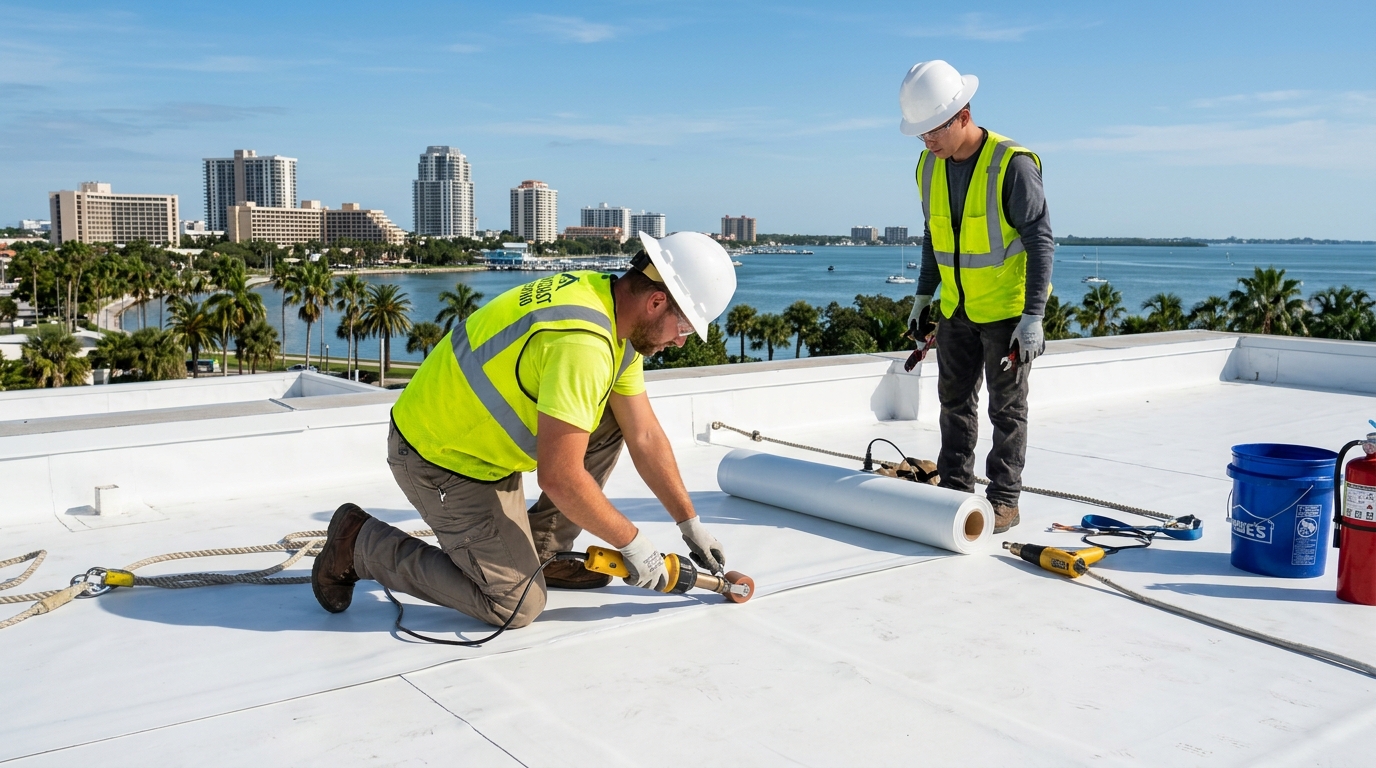
When sudden Central Indiana squalls, straight-line winds, or winter ice dams breach residential roofing envelopes, active rainwater penetrates attic cavities within minutes. Trapped stormwater saturates fiberglass insulation, rots structural rafters, and pools atop ceiling drywall until sheets collapse. Roof Expert USA provides 24/7 emergency leak triage, connecting Indianapolis homeowners with licensed, fully equipped roofing technicians who execute immediate water containment, structural rafter tracking, and permanent storm restorations.
Engineering Specialty: Wind Shingle Blow-Off Sealing
Indianapolis's open plains topography exposes residential neighborhoods to powerful severe thunderstorm downbursts and squall lines with wind speeds reaching 60 to 75 mph. On aging or improperly installed architectural roofs, high winds create severe negative pressure uplift that breaks asphalt adhesive sealant strips. Once unbonded, shingle courses peel back like card decks, exposing bare synthetic underlayment or raw plywood decking to horizontal driving rain.
Wind shingle blow-off sealing is the critical engineering protocol used by dispatched contractors to halt moisture ingress immediately. Crews install heavy-duty, 10-mil woven UV-resistant polyethylene tarps directly over the blown-out shingle fields. Crucially, the tarp is mechanically secured using 2x4 dimensional lumber battens screwed into structural rafters with 3.5-inch coated screws, wrapped twice around the lumber perimeter to distribute uplift loads evenly and eliminate billowing during subsequent wind gusts.
Active Leak Mitigation Protocols
Interior Puncture Pressure Relief
Technicians guide homeowners to relieve sagging ceiling drywall bulges by carefully puncturing the center with a screwdriver, funneling concentrated water into buckets to prevent drywall sheet collapse.
Rafter-Line Moisture Tracking
Because water migrates horizontally along angled rafters and wiring, technicians trace moisture paths from interior ceiling drips back to the true exterior penetration point on the roof plane.
Emergency Shingle Replacement
Crews extract damaged or missing shingles, inspect underlying deck sheathing for dry rot, slide matching architectural shingles under existing laps, and hand-seal each tab with butyl mastic.
Attic Decontamination & Moisture Check
Crews use calibrated pin-type moisture meters and thermal cameras to identify saturated insulation batts, preventing mold growth and protecting indoor air quality.
What to Do Inside Your Indianapolis Home While Dispatch Is En Route
While an independent emergency roofing crew is traveling to your Indianapolis home, these immediate containment actions will minimize structural and interior property losses:
- Contain Water Spills: Place deep buckets or plastic storage bins under active ceiling drips. Lay thick bath towels around the bucket base to absorb splatter on hardwood or carpet.
- Cut Power to Affected Circuits: If water is dripping through ceiling light fixtures, ceiling fans, or electrical outlets, turn off the corresponding breaker immediately at your main electrical service panel.
- Move Furniture and Valuables: Move couches, tables, electronics, and rugs away from the drip radius, and cover immovable items with plastic drop cloths or trash bags.
- Keep Off the Roof: Never attempt to climb onto a wet, pitched roof during active rain. Call our 24/7 dispatch desk at (888) 208-4155 for trained emergency crews.
Frequently Asked Questions
Why does a ceiling leak appear far from where the roof is actually damaged? +
Water entering a roof breach rarely drops straight down. Rainwater hits the roof deck, flows horizontally along sloping rafters or electrical conduit lines, and eventually pools on ceiling drywall until it finds a screw hole or drywall joint.
Can an emergency leak repair be performed during an active rainstorm? +
Yes. Emergency crews utilize rapid-containment techniques, such as heavy-duty timber-battened tarps, rubber diversion funnels inside the attic, and specialized wet-surface flashing mastics to stop water ingress until weather allows permanent shingle restoration.
How do I request emergency leak dispatch in Indianapolis? +
Simply call our 24/7 intake desk at (888) 208-4155. Our coordinators gather your details and dispatch the closest available independent contractor across Marion County.